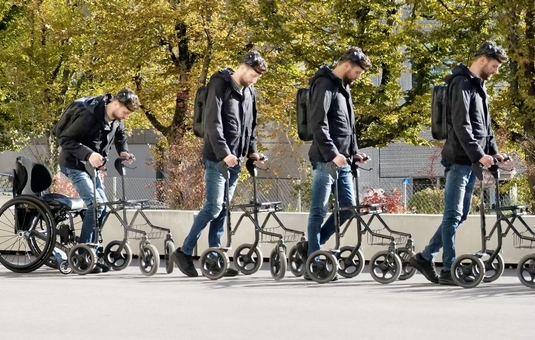
In a world-first medical breakthrough, a person with paraplegia has regained the ability to walk by controlling the movement of his legs through thought alone. This achievement was made possible by a novel brain-spine interface (BSI), developed through a Franco-Swiss research collaboration involving France’s Atomic Energy and Alternative Energies Commission (CEA).
The pioneering results, published in the journal *Nature* on May 24, 2023, mark a significant leap in neurotechnology. The system works by decoding movement intentions from brain signals recorded via an implant over the brain’s motor cortex. These signals are wirelessly transmitted and processed in real-time by a wearable computer, which then translates them into commands for electrical stimulation of the spinal cord. This stimulation activates the leg muscles, effectively bypassing the damaged section of the spinal cord and restoring voluntary control of stepping.
The patient, a 40-year-old man who had been paralyzed for over a decade following a spinal cord injury, was able to walk naturally on ground, climb stairs, and navigate complex terrain using the BSI. After extensive calibration and training with the system, he achieved a remarkable degree of mobility and independence, including the ability to stand and walk for sustained periods without requiring upper body support from a walker.
This research, led by teams at the CEA, the University of Lausanne, and the Lausanne University Hospital (CHUV), demonstrates the feasibility of a digital bridge to restore communication between the brain and spinal cord. The scientists emphasize that the technology is still in an experimental, proof-of-concept stage, but it opens a promising pathway for future clinical applications to improve motor function in individuals with paralysis.