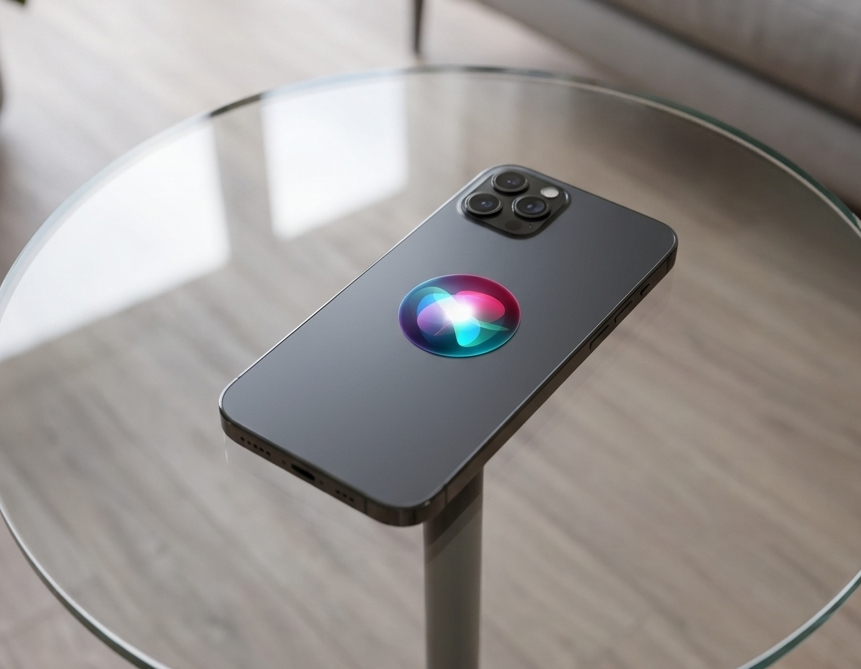
Two years ago, Apple promised a more natural, context-aware Siri with Apple Intelligence – capable of leveraging on-screen content, performing hundreds of in-app actions, and optionally calling on ChatGPT for writing tasks. But the rollout has been chaotic: unavailable in the EU except on Mac, and reportedly irritating OpenAI, which is considering a lawsuit over insufficient promotion of ChatGPT within Siri after failed renegotiations.
Apple has now completely dropped OpenAI from its official narrative in favor of Google. The rebranded Siri AI is built on Gemini models and runs on Google Cloud – a sharp turn for a company that heavily markets its privacy and security commitments.
Siri AI uses a hierarchy of five models. Two run locally: AFM Core (dense) and AFM Core Advanced (a mixture of experts focused on image analysis and speech synthesis). Two operate in Apple data centers: AFM Cloud (optimized for latency and cost) and AFM Cloud Image (image creation and editing). The most powerful, AFM Cloud Pro, is hosted on Google Cloud and handles reasoning and agentic tasks. Apple states the first four models were “refined” with Gemini, while AFM Cloud Pro delivers “quality similar to Gemini frontier models.”
To uphold privacy, Apple has extended its Private Cloud Compute (PCC) architecture – previously limited to Apple silicon – to NVIDIA GPUs on Google Cloud, citing NVIDIA Confidential Computing, Intel TDX on CPUs, and Google Titan chips as adequate confidential computing primitives to maintain PCC guarantees at scale.
Developers with apps under 2 million downloads (excluding redownloads) get free access to remote models. The developer beta now covers iOS, iPadOS, macOS, and visionOS (watchOS coming later); consumer availability begins “later this year” in English.
The EU launch remains blocked except on macOS and visionOS. Apple blames the bloc’s interoperability mandates, arguing they would force it to give any AI system near-unlimited device access and autonomous action “without continuous user visibility,” violating its privacy promises. It says it proposed a “Trusted System Agent” solution and an 18-month phased launch, both rejected by Brussels. The European Commission counters that Apple alone chose not to deploy, simply asking to be exempted from its obligations for at least 18 months rather than seeking a workable solution.